"Mama"

"Mama"
"Mama" by my daughter age 3
Showing posts with label 2nd grade. Show all posts

Wednesday, May 24, 2017

Flower Weavings


Another end of the year favorite. I teach paper weaving in 2nd grade to get the kiddos ready for yarn weaving in third grade. Students also learned about positive and negative space with this project.

Thursday, December 1, 2016

Thursday, October 13, 2016

Pumpkin Mosaics


2nd graders learned about the warm and cool colors of the color wheel. They used warm and cool colors to paint paper that was then used to create jack o’ lantern mosaics. We discussed that mosaics are a picture or pattern produced by arranging together small colored pieces of hard material, such as stone, tile, or glass. We created paper mosaics. Students paid close attention to leave space around all the colored shapes they glued to create the mosaic look. We reviewed gluing and cutting skills/ expectations as well. Learning targets for this project were:

  • I can control my paintbrush.
  • I can use my scissors safely.
  • I can use the correct amount of glue.
  • I can glue my papers flat.
  • I can create a mosaic.


Collaborative Beginning of the Year Keith Haring Paintings


First and second graders looked at Keith Haring's website under the kids section to learn facts about his life and work as an artist. The first graders traced each other's bodies and worked in small groups of 4 or 5 to paint in the figure. The second graders were responsible for outlining the figures in black and adding the painted black lines and shapes in the backgrounds. This was a great one day lesson for the first week back in art:)

**Thanks to Leah at What's Happening in the Art Room for the great idea!!**

Thursday, May 19, 2016

Collaborative Chihuly


2nd graders learned all about the ancient art of glass blowing and glass sculptor Dale Chihuly. We looked at examples of all his different sculptures and watched a video on the glass blowing process. It's so interesting that even though it is an ancient art form, over 2000 years old, little has changed about it and how artists create their pieces. Many of the tools that glass blowers use today are the same ones used 2000 years ago.
Students used washable marker, coffee filters, and starch spray to create this beautiful display outside of my classroom.

Aboriginal Hand/ Dot Paintings


Thursday, April 21, 2016

Positive/ Negative Animal Weavings


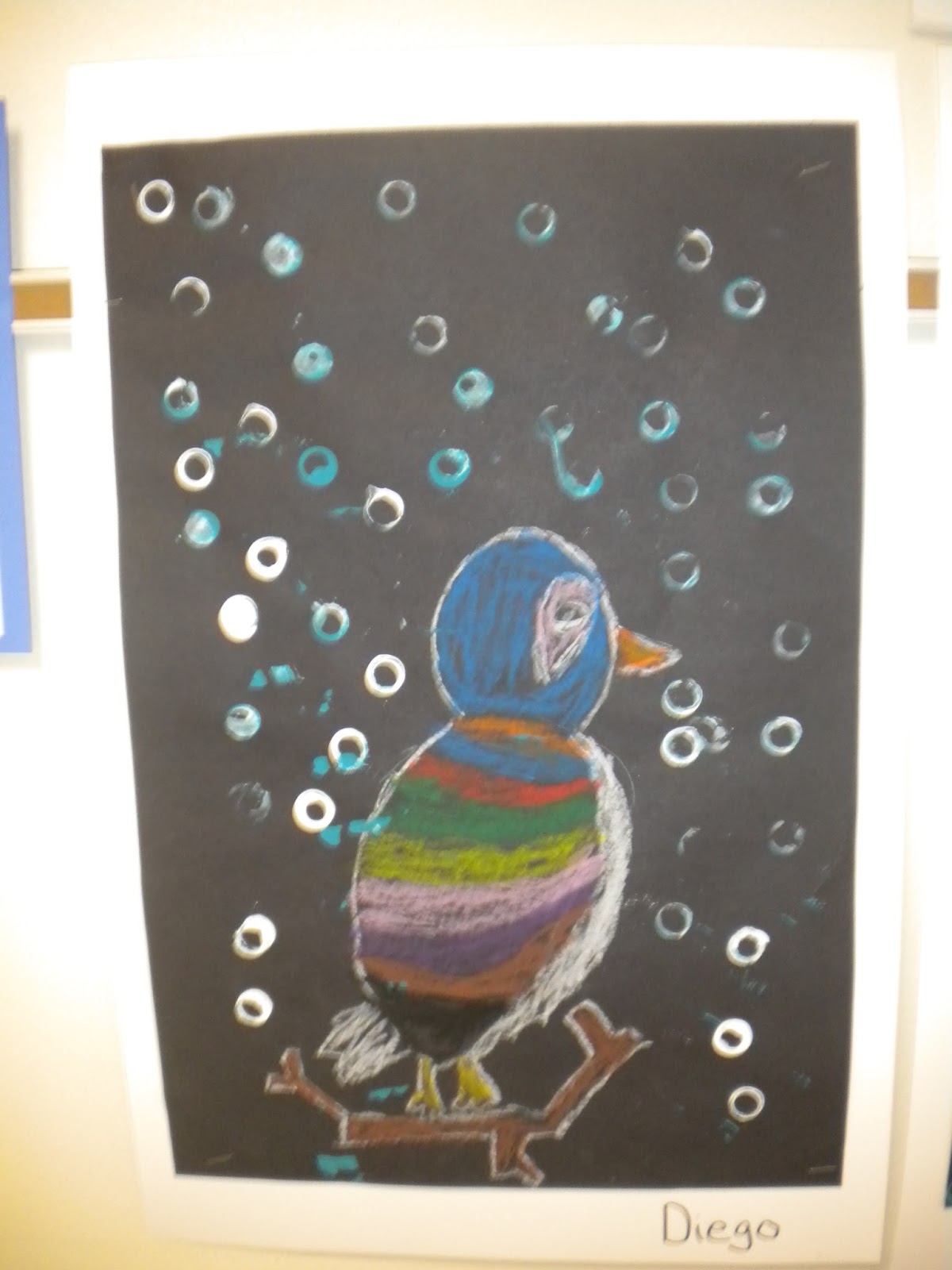
Rainbow Lorikeets


2nd graders learned about the rainbow lorikeet and other parrots through a Smartboard lesson and short video. They drew the bird step by step and then outlined with white oil pastel. Students then colored in with oil pastel and used marker caps to stamp patterns in the background.

Friday, March 4, 2016

Romare Bearden "The Block" Collage


The month of February is Black History Month. During this month of remembering African Americans in history, students in art class learned about African American Artists.
2nd grade students learned about the African American painter and collage artist, Romare Bearden. He spent much of his career as a painter, but is most recognized for his collage work.
A collage is when artists use several different materials to create a new one. Bearden often used photographs, magazines, and newspaper photos in his collage art.
2nd graders were inspired by Bearden’s artwork The Block. The Block celebrates a busy Harlem, New York city block. The artwork is 6 panels long, measuring 18 feet. This artwork is a symbolic scene from an African American experience

2nd graders used construction paper and magazine pages and photos to create a Second Grade City. Again, they were working on basic art skills of cutting and gluing, but also trying to create an interesting piece of art that tells a story.

Thursday, February 4, 2016

Tinted Winter Landscapes


Second Graders learned all about landscapes through this lesson. First we learned about value of colors and how to create a tint. Each student had their own paints to mix 3 tints of blue. While those dried, the students drew three different sized trees and colored them in with 3 different colors of green. The following week we dived in deep to discuss how to create a successful landscape. I found a Smart Board lesson on the Smart Exchange ( I can't take credit for creating this awesome lesson), that really broke down and identified the three main parts to a landscape: foreground, middleground, and background. Students watched a short art video of an artist creating a landscape drawing and then we identified each part of the landscape in that artwork. Next we played a vocabulary game that was like wheel of fortune to identify the parts of a landscape. Students then cut out and glued their different sized trees into the correct part of the landscape.

Lesson Idea from Dali's Moustache:

http://dalimoustache.blogspot.com/2011/12/winter-landscapes.html

Thursday, January 7, 2016